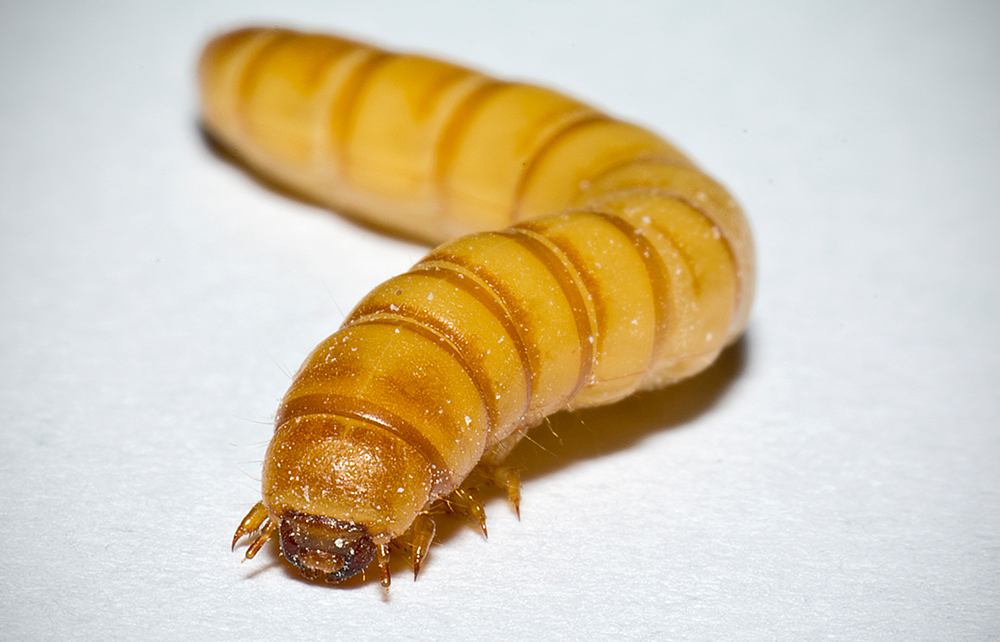
Innovative livestock production: the potential of insect farming
for the production for a sustainable animal feed
Zootecnia innovativa: potenzialità della insetticoltura
per la produzione di mangimi destinati a una alimentazione animale sostenibile
| Progetto Ricerca Corrente 2024 – Istituto Zooprofilattico Sperimentale della Sardegna – Ministero della Salute |
| As a preliminary activity, the situation of the scientific and regulatory aspects concerning insect farming will be defined, both internationally (FAO and IPIFF), as well as at the European and national levels. Contacts will be established and archived with institutions, research centers, universities, and entrepreneurs in the field of insect farming. For the rationalization of the project’s phases, a single target insect species will be identified for breeding to produce animal feed. Various matrices to be analyzed will be defined (breeding substrate, insect feed, insect-derived flours, excrement, frass, final breeding waste) and the number of samples to be taken in the farms and processing sites where insects are transformed into meal. The progress of the different phases of insect breeding (development and growth, feeding, animal welfare, collection, slaughter, flour production, administration to farmed animals, transport, and distribution of frass-based fertilizers in the field) will be monitored. Laboratory evaluations will be carried out on the environmental, managerial, health, and hygiene conditions of insect farms. The study will be applied in experimental farms already existing at IZS in Viterbo and the University of Pisa, operational units of the project. Documentation will be prepared, including a checklist for collecting information to obtain precise data on the management of insect farms. Guidelines, checklists, and recommendations will be defined for replicating research and entrepreneurial initiatives in insect farming and feed transformation. A shared spreadsheet will also be prepared for the systematic collection of data (e.g., company code, activation of a database with particular attention to insect farming with information and data from both insect breeders and insect feed producers, and generally from Feed Sector Operators (FSO)). A concurrent statistical analysis will be carried out associated with the evaluation and comparison of the collected data, both from the various and articulated laboratory activities and on the managerial innovations of insect farming, as well as on the aspects. |



| Ministero dell’Università e della Ricerca MUR – BANDO PRIN 2022 PNRR |
| In the last years, ground-breaking researches on insect farming have paved the way for accelerated uptake and innovation of this source as a feed in several animal sectors, including fish, poultry and pigs. In the aquaculture sector, the potential use of insect meals in fish diets has been recognized as an important sustainable source with positive consequence of hindering climate change and fostering economic and environmental sustainability, and it has attracted much attention among the scientific community and the food and feed industry worldwide. Due to the importance of fish production in the southern European area, including Italy, it is important to investigate how changes in the feeding system could influence the market in terms of implications for producers, retailers, food service providers, policy-makers, and consumer responses. The general objective of “InsectFish. The use of insect meal in the fish sector: creating value from farm to fork” is enhancing research knowledge, from farm-to-fork, on the production of one of the main important farmed and marketed fish in Italy, i.e., seabream (Sparus aurata) using insect meal. To achieve this objective, the study will evaluate the final product quality, nutrition profile, sensory and consumer perception of fish fed with insect meal compared to a tradition fish, and encouraging close collaboration among stakeholders to establish a multidisciplinary pathway for insect meal in the fish sector. Being this a new concept, it is necessary to understand how consumers feel about this product innovation. At the same time, the launch of new products in the market could also affect the fish retails and the food service, which are now called to become an actor in the global effort to switch towards a healthier and more sustainable food consumption. Hence, by involving different stakeholders, the study also aims at finding strategies and communication tools to boost such products in the Italian market. To the best of our knowledge, no studies using a multidisciplinary approach have already investigated the dietary effects of insect meal on fish life performance of the seabream while including a sensory evaluation and consumer study to evaluate the potential changes in overall liking, willingness-to-pay, perception, and information provision. The two Research Units part of this project “InsectFish”, members of the Department of Veterinary Sciences of the University of Pisa and the Department of Food and Drug of the University of Parma can provide balanced expertise in the field of aquaculture farming, food quality analysis, consumer’s behavior and sensory sciences. Finally, our communication, dissemination, and exploitation activities will share and describe the project’s approaches and findings to the wider scientific community, general public, policy actors and food industries. |


| PRIMA – Section 1 – Farming Systems 2022 |
| The general objective of SHARInG-MeD is building an open and concerted soil monitoring scheme to integrate physico-chemical, biological (microbes, nematodes, invertebrates, plants), agronomic, economic and environmental indicators of the Mediterranean croplands; build models of the soil properties at the wide scale; changes of soil properties at the fine scale; relationship between land or crop (especially soil) management practices with environmental and economic performances of the agricultural systems or crops; models of harmonization of soil data among various public databases; and foster the diffusion of the soil improving practices (conservation agriculture, application of organic materials, use of beneficial microbes) in the Mediterranean drylands, with special emphasis to the West Asia and Nord Africa (WANA). An active promotion of the advantages and limitations of these strategies (land use and land use change, conservation practices, organic amendments and beneficial microbes) and of the Horizon Europe Soil Mission will be pursued by website, mass and social media activities, magazine and scientific publications, photos, videos, congress, high school lessons, farmers’ school, and a Massive Open Online Course on the project activities. These data and models will increase the agriculture sustainability by informing stakeholders on the use of and relationships among these indicators for Mediterranean landscape and crop sustainable managements and will provide a tool to modulate the contribution of agriculture on the mitigation of the climate change. To achieve SHARInG-MeD aim, the soil sampling campaigns from two wide land collection strategies in Europe (LUCAS soil module) and Africa (H2020 Soil4Africa) and the Soil Atlas of the Mediterranean Region will be derived, along with data from the literature on the methodologies of soil and crop analyses. A SHARInG-MeD sampling campaign will be established by collecting samples complying at the one time with Soil4Africa H2020 “topsoil” and LUCAS soil module. The sampling scheme of SHARInG-MeD will include both new sites and resampling of known sites in LUCAS soil module, Soil4Africa, and Soil Atlas and covering their lack of sampling. Sampling will be conducted in paired land uses (including a cropland, and considering areas affected by salinity and/or overgrazing) or field experiments dealing with soil improving management practices. The above-mentioned soil properties (including soil life indicators) and potential GHG emissions will be measured. In the field experiments, economic fluxes and Life Cycle Assessment will be measured. Models will be built to harmonize these sampling schemes. The models produced in SHARInG-MeD will undergo both an internal and an external validation against published data in national, EU, and non-EU research repositories, infrastructures, and living labs. These aims and expected results cover all requirements of the specific topic by providing a tool for the measurement of the soil degradation process, and crop profitability and environmental impact, thus enabling an environment for the protection, restoration and improvement of soil health in the Mediterranean drylands; providing harmonization models and indicators of agricultural health from both environmental and human needs; by validating these models in actual conditions; by performing an evidence synthesis of the state of monitoring and existing soil data in the Mediterranean area and providing models for the existing physico-chemical, biological, agronomic, economic and other environmental indicators for region-wide assessment of soil ecosystem health; by identifying and establishing synergies with other H2020, PRIMA, national projects and initiatives, research infrastructures and living labs; by providing a tool for the harmonization of the National Soil Surveys in the Soil Atlas; by engaging general public and stakeholders in fruitful dissemination and communication activities. |